
Global Markets Weekly: Nvidia, Fed Rates & Anthropic IPO | Synergi
Global Markets Hold Firm as Nvidia Turmoil, Rate Risks and Anthropic IPO Take Centre Stage
17 November 2026 | Synergi Investment – Market Commentary
Financial markets have experienced another unsettled week, with developments across technology, financial markets and global infrastructure adding to the sense of uncertainty. Yet equity investors have so far shown resilience, with major US stock indices ending last week higher despite some significant corporate and economic concerns.
The focus now turns to interest-rate expectations, energy markets, corporate earnings and one of the largest potential technology IPOs in history.
A week of corporate and infrastructure disruption
Nvidia was at the centre of attention following the resignation of its chief executive, Jensen Huang, on 12 November. The leadership change created uncertainty around one of the world’s most influential technology companies. Although some employees and prominent business figures have called for his return, reports on 16 November indicated that Nvidia’s board was not considering reinstating him.
Meanwhile, a prolonged Microsoft services outage disrupted Outlook, Teams and other Microsoft 365 services for users and organisations. The disruption extended into Friday, highlighting how dependent businesses have become on a relatively small number of critical technology platforms.
The United States also experienced significant aviation disruption on Friday following a telecommunications failure that prompted a nationwide ground stop. The incident led to substantial flight cancellations while authorities worked to restore normal operations.
In the UK, the government’s updated emergency-preparedness guidance has encouraged households to consider keeping essential supplies at home, including three days of drinking water and non-perishable food. The advice is focused on practical preparation for potential disruption rather than predicting any specific event.
Equity markets show resilience
Despite the headlines, equity investors delivered a relatively positive performance during the week of 9–13 November.
The S&P 500 gained 2.5%, while the Dow Jones Industrial Average rose 2.1%. The Nasdaq Composite finished 2.3% higher, and the Russell 2000 advanced 1.3%.
Nvidia’s weakness contrasted with the broader market’s performance. This suggests that investors were not necessarily abandoning equities altogether, but were reassessing their exposure and moving capital between companies and sectors.
The distinction is important. A sharp fall in a major technology stock does not automatically indicate a broader retreat from risk assets. Market participation and the performance of other sectors remain important indicators to watch.
Interest-rate expectations move back into focus
Interest rates are once again a central concern for investors.
Recent US inflation figures and comments from Federal Reserve officials have caused markets to reassess the likely path of monetary policy.
In a speech on 10 November, Federal Reserve Governor Christopher Waller said that he would generally favour a 0.25 percentage-point increase at the December meeting if inflation evolved as expected. However, he also argued that a larger 0.50 percentage-point increase should be considered if inflation remained stronger than anticipated.
October’s US consumer price data subsequently showed headline CPI rising by 0.4% month on month, while core CPI increased by 0.3%. This has added to the debate about whether inflationary pressures are proving more persistent than policymakers would like.
The Federal Reserve’s next meeting is scheduled for 8–9 December. The direction of interest rates will remain an important influence on bond yields, equity valuations and investor sentiment.
Oil prices and geopolitical uncertainty
Oil markets have also experienced significant movements during November.
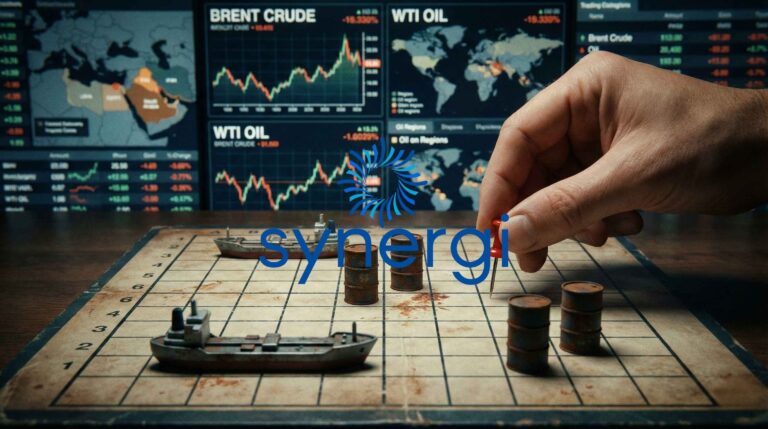
By 17 November, US West Texas Intermediate (WTI) crude was down approximately 18% for the month, despite a modest rise in prices during Tuesday’s trading.
The market has been balancing expectations of increased supply and a potential global surplus against ongoing geopolitical uncertainty in the Middle East.
Security concerns around the Strait of Hormuz and regional infrastructure continue to represent potential sources of volatility. While lower energy prices can ease inflationary pressure, further developments in the region could quickly change the outlook.
UK economic data: what investors are watching
The latest UK labour-market figures, published on 17 November, presented a mixed picture.
The employment rate rose to 75.4% for July to September 2026, while the unemployment rate declined to 4.6%. However, the number of payrolled employees fell by 34,000 between September and October, according to provisional estimates.
Annual regular-pay growth also slowed to 3.5% over July to September.
Attention now turns to the next round of economic releases:
- 18 November: UK consumer price inflation for October.
- 20 November: UK retail sales and public-sector finances for October.
- 20 November: GfK UK consumer confidence.
These figures should provide further insight into household confidence, consumer spending and the direction of inflation.
Nvidia earnings and the Anthropic IPO
Corporate earnings will provide another important test of investor confidence.
Nvidia is scheduled to report its third-quarter fiscal 2027 results on 17 November, after the US market closes. Given the company’s importance to the artificial-intelligence industry, investors will be watching its financial performance and commentary closely.
Results from consumer-facing companies may also provide further evidence about the strength of the wider economy. Meanwhile, earnings from companies often described as potential AI-disruption losers could offer clues about how quickly AI agents are changing established business models.
Another major event is Anthropic’s planned initial public offering.
The company has filed for a public offering with an indicative US price range of $70–$78 per share, covering an initial 825 million shares. The offering is scheduled to be priced on 18 November, with trading expected to begin on Nasdaq on 19 November, subject to the final timetable.
The transaction also includes a planned $26 billion concurrent private placement and an underwriters’ option to purchase additional shares. Taken together, the potential financing could approach $100 billion before expenses if the options are fully exercised.
Reports have also indicated that demand for the offering has significantly exceeded the shares initially available. However, the final price, allocation and overall demand will determine the eventual outcome.
A successful listing could renew enthusiasm for AI-related investments and encourage other companies considering public offerings. On the other hand, such a large transaction could also attract substantial investor capital away from other areas of the market.
For comparison, SpaceX raised approximately $85.7 billion in its June 2026 IPO. The potential Anthropic financing is structured differently because it includes a concurrent private placement, so the headline totals are not directly comparable.
What matters next
Markets are entering another important period in which several forces may shape investor sentiment: inflation, central-bank policy, energy prices, corporate earnings and the continued expansion of artificial intelligence.
The resilience shown by equities last week is encouraging, but it does not remove the risks associated with changing interest-rate expectations, geopolitical developments or shifts in corporate leadership.
For investors, the important task is to distinguish short-term market movements from developments that may have a lasting effect on businesses, valuations and the wider economic environment.
A considered approach to investment planning should take account of individual objectives, time horizons, risk tolerance and the wider financial picture rather than reacting to every new headline.
Understanding your wider financial position
Market developments can affect different investors in different ways. Understanding how your investments fit into your broader financial objectives is an important part of long-term planning.
Explore Synergi Investment’s wealth management services to learn more about its approach.
This article is for general information and market commentary purposes only. It does not constitute personal financial, investment, legal or tax advice, and should not be relied upon as a recommendation to buy, sell or hold any investment. Market conditions and forecasts can change, and investment values can fall as well as rise.